Ten years ago, a website and a Facebook page could carry a restaurant a long way.
I remember because that was pretty much what we had.
Post the lunch special. Put the menu on the website. Take a decent picture of a burger. Cross your fingers that Facebook actually showed it to somebody.
Times have changed.
Today, the battle for your customer's attention is happening on a screen they carry around all day long.
Their phone.
They use it to decide where to eat, look at reviews, check menus, make reservations, order takeout, find directions, watch videos and decide whether tonight is a pizza night or a steak night.
So the question isn't really: “Does my restaurant need a mobile strategy?” The better question is: “How easy am I making it for a customer to choose me from their phone?” And that's where mobile apps start becoming very interesting.
Your Restaurant Needs to Be Where Your Guests Already Are
Restaurant owners sometimes make marketing more complicated than it needs to be. Go where the customer is. And your customer is on their phone.
Think about how somebody chooses a restaurant today. They're probably not sitting at a desktop computer typing in restaurant websites one at a time. They're scrolling Instagram. They're searching Google. They're looking at pictures. They're reading reviews. They're texting their spouse: “What do you want to eat?” And if we're being realistic, the answer is probably: “I don't care. You pick.”
Now you've got about five minutes to win that decision. That's why your mobile experience matters. Your menu should be easy to read. Ordering should be simple. Directions should be one tap away. Reservations shouldn't require a scavenger hunt. Every extra step gives a customer another opportunity to choose somebody else.
A Mobile App Puts Your Restaurant in Their Pocket
There's a major difference between someone following your restaurant on social media and someone downloading your app. Social media is rented space. Your post is competing against friends, family, news, memes, influencers, sports highlights and probably somebody arguing in the comments about something that has absolutely nothing to do with your restaurant.
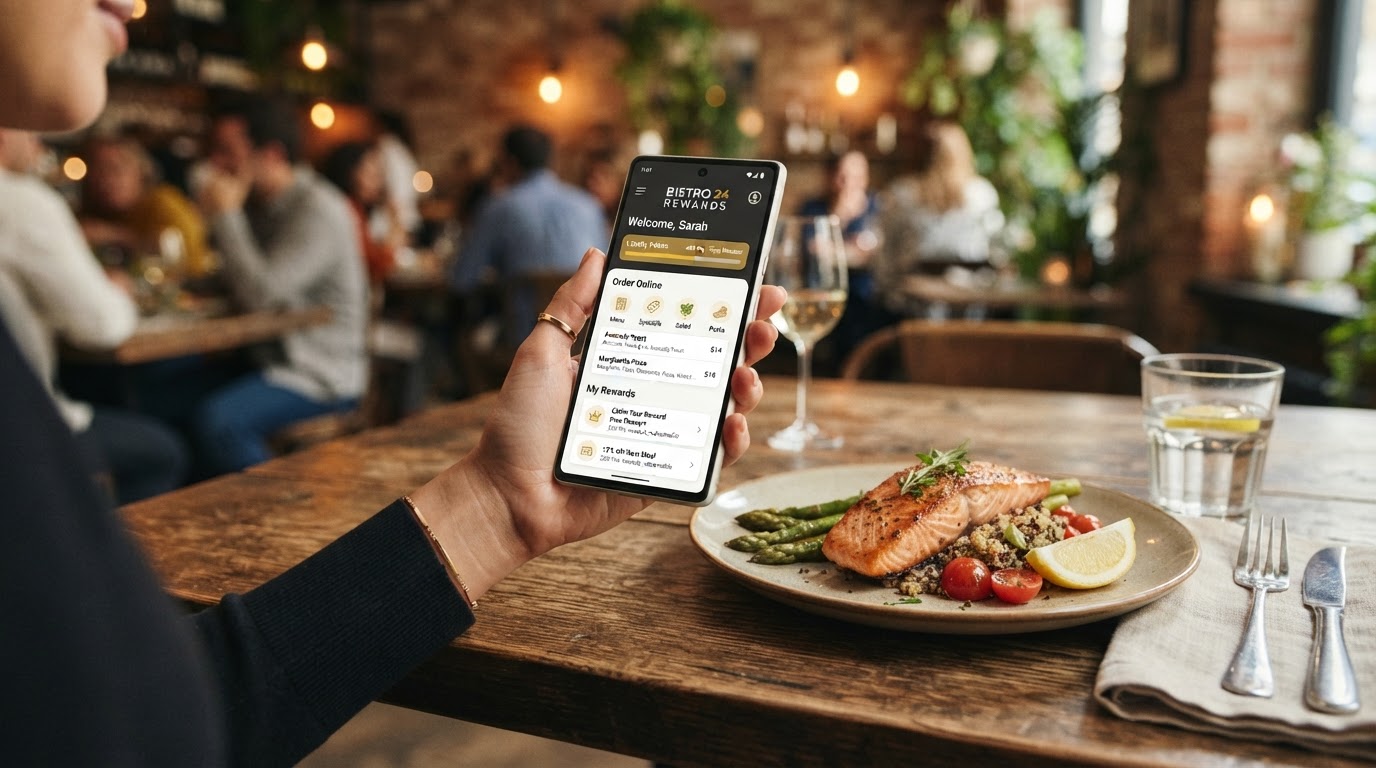
Your app is different. It's your space. Your restaurant's icon sits right there on the guest's phone. One tap can give them access to your menu, online ordering, reservations, loyalty rewards, gift cards, events, specials, locations, catering, and direct communication with your restaurant. That's powerful. You aren't waiting on an algorithm to decide whether your customer sees you. You've created a direct connection.
Push Notifications Can Turn Marketing Into Timing
Marketing isn't always about creating a better offer. Sometimes it's about delivering the right message at the right time. Imagine it's 10:45 on a Tuesday morning. Your restaurant sends: “Lunch special today: smoked chicken, two sides and a drink. Available until 2 PM.” You just reached customers right before they started deciding where to eat.
Or maybe it's Friday afternoon: “Live music tonight at 7. Tables are filling up.” Or Sunday: “Kids eat free tonight. You've cooked enough this weekend.” That's where push notifications become valuable.
But there's an important word here: valuable. If every notification says BUY SOMETHING, people will turn them off. Your mobile marketing should feel like hospitality. Give guests useful information. Give them something worth opening. Then when you have an offer, you've earned their attention.
Loyalty Programs Belong on the Phone
Remember punch cards? Buy ten sandwiches and get the eleventh free. Great idea. Until the customer loses the card, washes it in their jeans or has six different cards sitting in the glove compartment. Mobile loyalty fixes that. Guests can see their rewards, track progress and redeem offers without carrying anything.
Even better, your restaurant can begin communicating with customers based on their relationship with the business. Instead of treating every guest exactly the same, you can eventually create campaigns for customers who visit frequently, haven't visited recently, order certain menu items, have an upcoming birthday, join your loyalty program, order takeout, attend events, or purchase gift cards. That's when marketing becomes less about blasting everybody with coupons and more about building relationships.
Direct Ordering Can Protect More Than Your Margin
Third-party ordering platforms can absolutely have a place in a restaurant's strategy. They provide exposure and convenience. But there's a difference between using a third-party platform to find customers and depending on one to own your customers.
When someone orders directly through your restaurant's mobile experience, you have an opportunity to keep more of the relationship. And the relationship may ultimately be more valuable than the individual order. Your customer database can help power future email campaigns, text marketing, loyalty offers, birthday promotions, event announcements, win-back campaigns, and special offers. Now one transaction can become ten transactions. That's a much different way of looking at restaurant marketing.
The Real Opportunity Is Owning the Guest Relationship
This is the part restaurant owners should pay the most attention to. For years, restaurants built businesses around transactions. A customer walks in. They eat. They pay. They leave. Hopefully they come back.
Technology gives independent restaurants an opportunity to start building around relationships instead. If someone loves your restaurant, why shouldn't you have a way to stay connected with them? They already told you they like what you do. They're the easiest people in the world to market to. Yet restaurants spend thousands of dollars every year advertising to complete strangers while doing very little to communicate with the customers who already know and love them. That's backwards. A good mobile strategy helps fix it.
Your App Should Do More Than Take Orders
This is where I think restaurant apps are heading next. I don't believe the future is simply: “Here's our restaurant app. You can order food.” That's useful. But we can go much further.
Imagine one restaurant app becoming the customer's connection to your entire brand: order food, join loyalty, make reservations, buy tickets, book catering, purchase gift cards, see tonight's entertainment, receive personalized offers, leave feedback, refer a friend, and join your VIP club. Now you're not building an ordering app. You're building a restaurant ecosystem. And for independent restaurants competing against massive chains with enormous technology budgets, that matters.
Technology Should Make Hospitality Better — Not Replace It
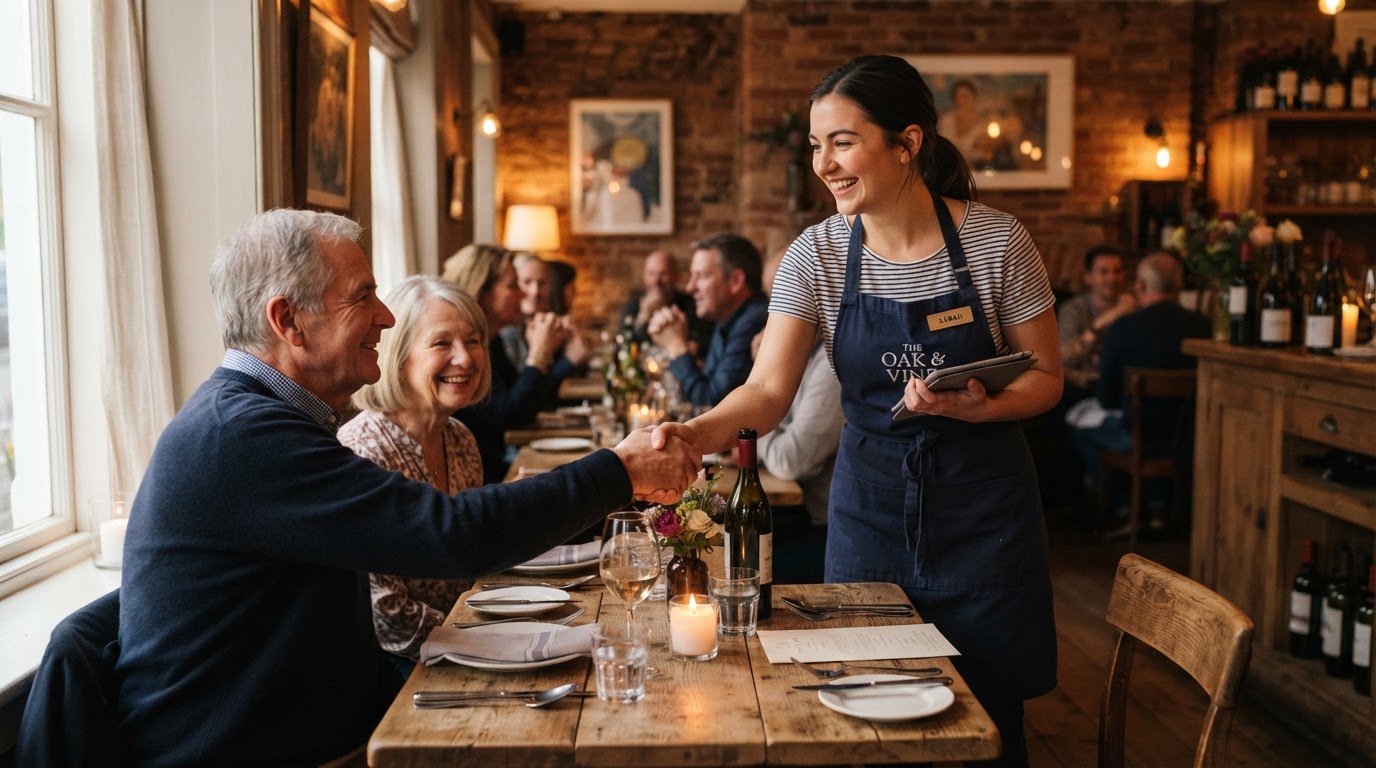
I love technology. But restaurants are still a people business. No app replaces a great server. No automation replaces someone remembering a customer's name. No push notification replaces great food. Technology's job should be to make those experiences easier to create and easier to repeat.
That's how I look at mobile marketing. It's not about being more “techy.” It's about removing friction between your restaurant and the people who want to do business with you. Make ordering easier. Make loyalty easier. Make communication easier. Make coming back easier. That's the goal.
The Restaurant in Their Pocket Usually Gets Another Chance
Customers have more restaurant choices than ever. You aren't just competing with the restaurant across the street anymore. You're competing with every restaurant that can appear on that customer's screen. That's why owning a direct connection to your guests is becoming increasingly valuable.
A restaurant mobile app isn't simply another piece of technology. Done correctly, it can become part of your ordering system, loyalty program, customer database and marketing strategy — all working together. And that may be the biggest opportunity of all.
Don't just get the order. Build the relationship that gets the next one.
Restaurant 360 Pro is built by restaurant people, for restaurant people. We help independent restaurant owners bring marketing, technology, customer communication, reputation management, operations and growth tools together so they're not trying to manage ten different companies just to run one restaurant. If you're interested in building a mobile strategy for your restaurant — from direct ordering and loyalty to automated marketing and customer retention — let's talk.
Look, you've read this far — so let's skip the small talk.
If any of this hit a little too close to home, that's a sign it's time to do something about it. We're local, we've run restaurants, and I'd love to help you sort yours out — no jargon, no pressure, just an honest read from somebody who's been behind the line.