Restaurant technology has exploded — there's an app for everything, and a new sales rep in your inbox every week promising it'll change your life. I've waded through more of these tools than I can count. The truth is, you don't need every tool — you need the right ones, connected. Here's what a real restaurant tech stack looks like.
The POS is the hub
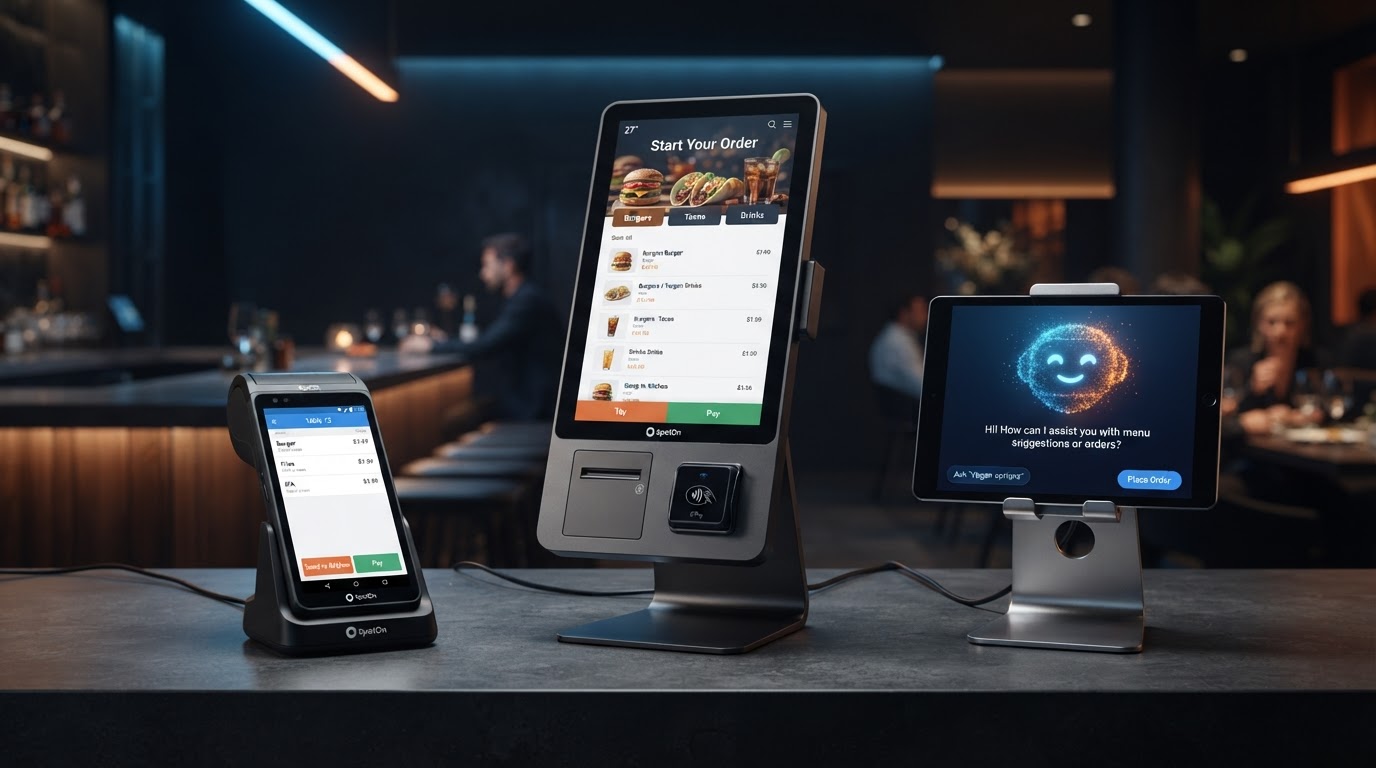
Your point-of-sale system is the center of the stack. Everything else — payments, online ordering, kitchen display, reporting — connects back to it. Choosing a POS that integrates well saves you from a pile of disconnected tools that don't talk to each other.
Payments connect to the POS
Integrated payment processing means orders and payments flow through one system. No double entry, no separate terminal, no reconciling two reports at the end of the night.
Online ordering and delivery
Online ordering should feed straight into your POS so the kitchen sees those orders alongside in-house tickets. Delivery integrations (DoorDash, Uber Eats) can also route through the POS so you're not juggling tablets at the counter.
Kitchen display and reporting
A kitchen display system (KDS) replaces paper tickets and routes orders to the right stations. Reporting pulls it all together so you can see sales, labor, and item performance without digging through spreadsheets.
The right technology stack should make your life simpler, not give you seven more logins to remember. I help restaurants choose and connect tools that actually fit how they run — no shiny-object sales pitch. Explore our restaurant technology solutions and let's build yours.
Look, you've read this far — so let's skip the small talk.
If any of this hit a little too close to home, that's a sign it's time to do something about it. We're local, we've run restaurants, and I'd love to help you sort yours out — no jargon, no pressure, just an honest read from somebody who's been behind the line.