Third-party delivery apps can bring in real revenue — but running three separate tablets at the counter is a mess I wouldn't wish on anybody. I've watched staff miss orders during a rush because they were babysitting devices instead of guests. Integrating them straight into your POS fixes it. Here's how and why.
The tablet chaos problem
Without integration, every delivery app lives on its own tablet at the counter. Orders come in on different devices, staff have to manually enter them into the POS, and tickets get missed during a rush. It's error-prone and stressful.
Direct-to-POS integration
When delivery apps connect to your POS, every order — DoorDash, Uber Eats, Grubhub — flows straight into your system and prints to the kitchen like any other ticket. One screen, one workflow, no manual re-entry.
What changes for your team
Fewer missed orders, fewer entry mistakes, and faster throughput during peak delivery hours. Your staff stops babysitting tablets and focuses on guests. Reporting also consolidates, so you see all your sales in one place.
Keep your menu consistent
Integration also helps keep your online menus synced — when you change a price or 86 an item in your POS, it can update across your delivery channels so guests don't order something you can't make.
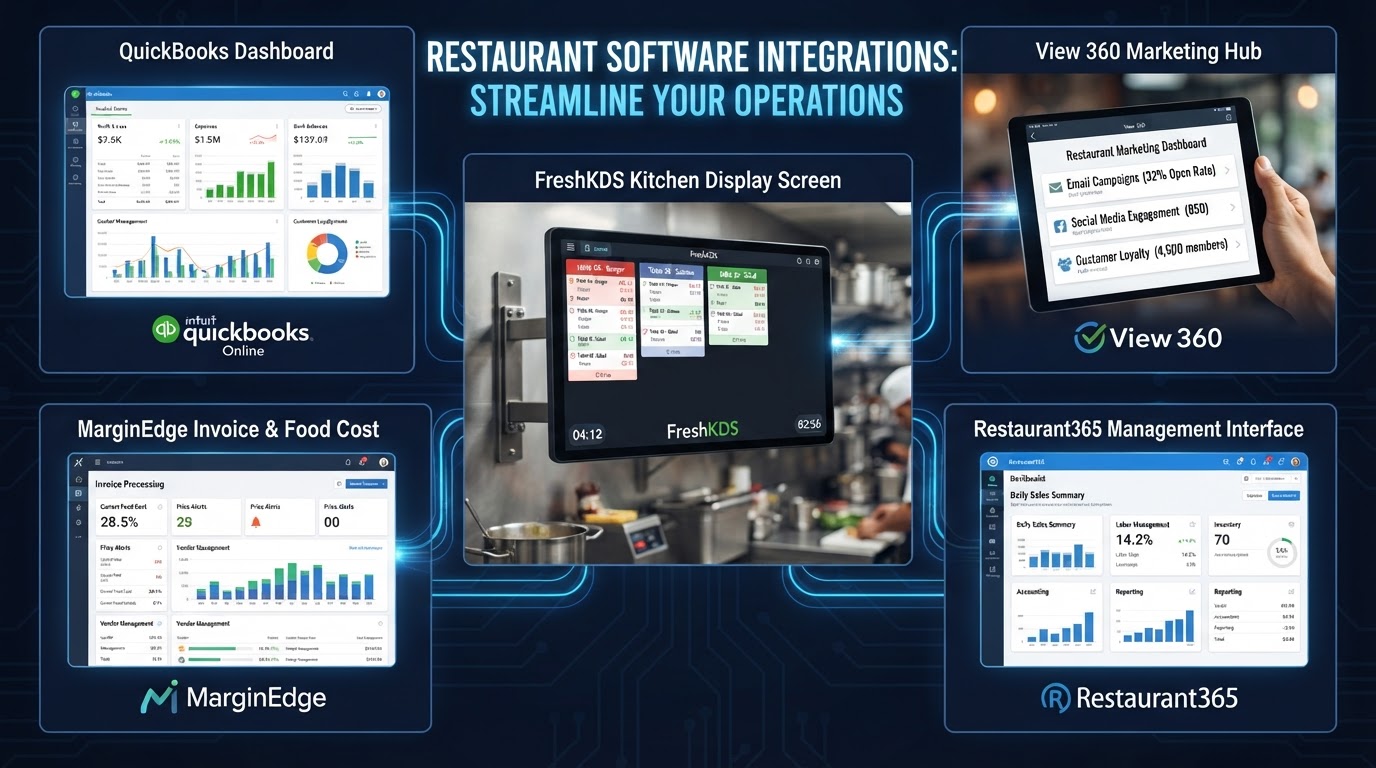
I connect DoorDash, Uber Eats, and Grubhub directly to your SpotOn POS — one screen, one workflow, no more tablet zoo. Explore our 3rd-party integration services and let's clean up your counter.
Look, you've read this far — so let's skip the small talk.
If any of this hit a little too close to home, that's a sign it's time to do something about it. We're local, we've run restaurants, and I'd love to help you sort yours out — no jargon, no pressure, just an honest read from somebody who's been behind the line.